How the brain protects the ear: the role of the efferent system during noise-induced trauma
Worldwide, almost half a billion people have disabling hearing loss and 1.1 billion young people (12-35 years old) are at risk of losing their hearing due to recreational noise. In particular for loud sound exposure, noise-induced hearing loss (NIHL) can result from a loss of synapses between sensory cells and auditory nerve fibres, even before either cell type is terminally damaged, making this a crucial target for hearing protection therapies.
The auditory system is unique in receiving modulation from the CNS directly onto sensory cells. Medial olivocochlear (MOC) efferent neurons form a negative feedback gain-control system that inhibits the amplification of sounds by specialised sensory cells (outer hair cells - OHCs), mediated by α9α10 nicotinic acetylcholine receptors (nAChRs) located at the base of OHCs.
The MOC system has an important role in the protection from NIHL. We are exploring the molecular actors driving this protection, by studying changes in gene expression landscape, upon noise-induced trauma, in mouse models with different levels of α9α10 nAChR activity.
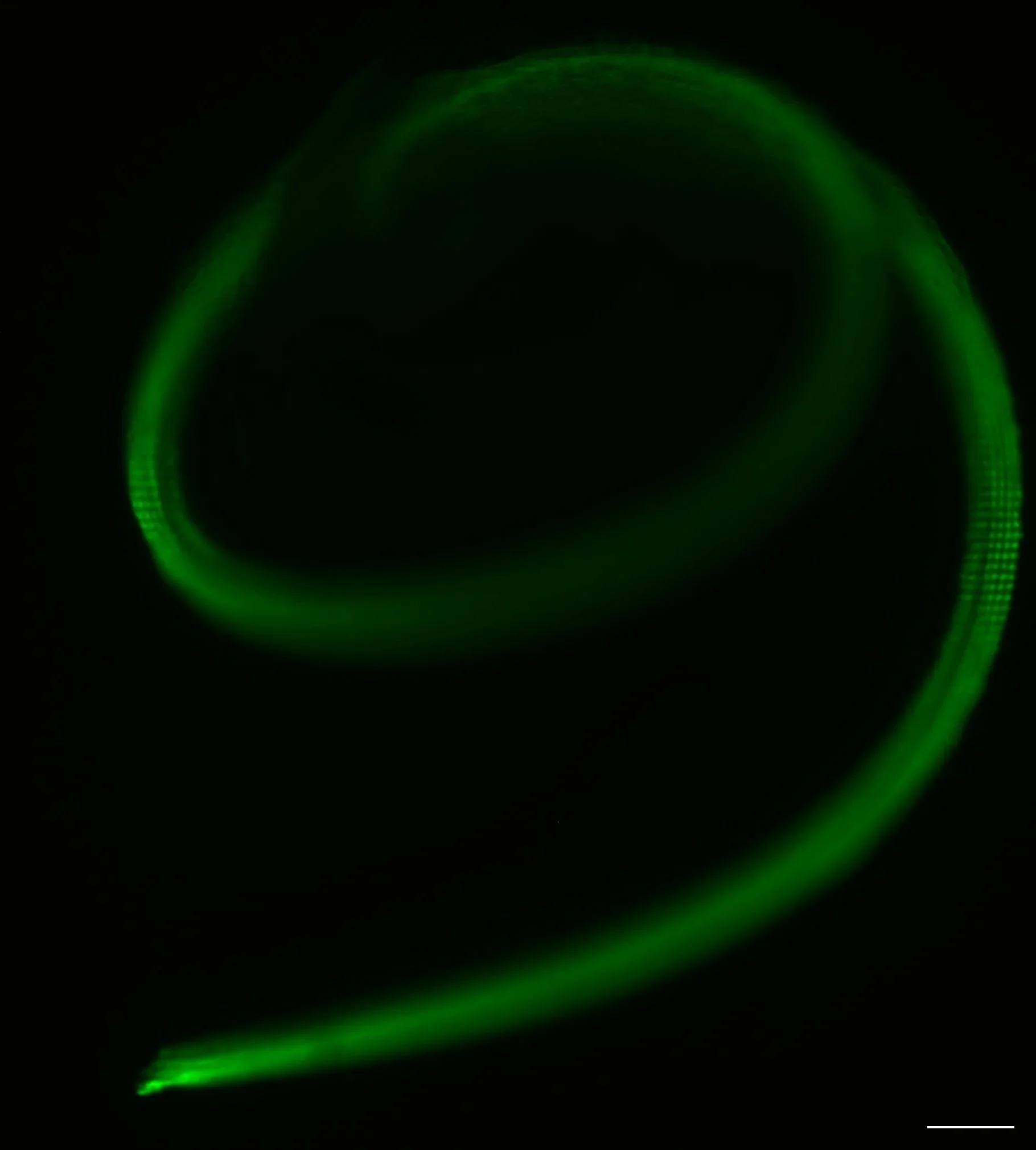
Image of the auditory sensory organ, the organ of Corti, with its characteristic spiral shape. The hair cells that compose it express GFP, making them visible in green under a fluorescence microscope. The preparation comes from the cochlea of a P1 mouse. The image was taken during the Biology of the Inner Ear course at MBL in 2022.