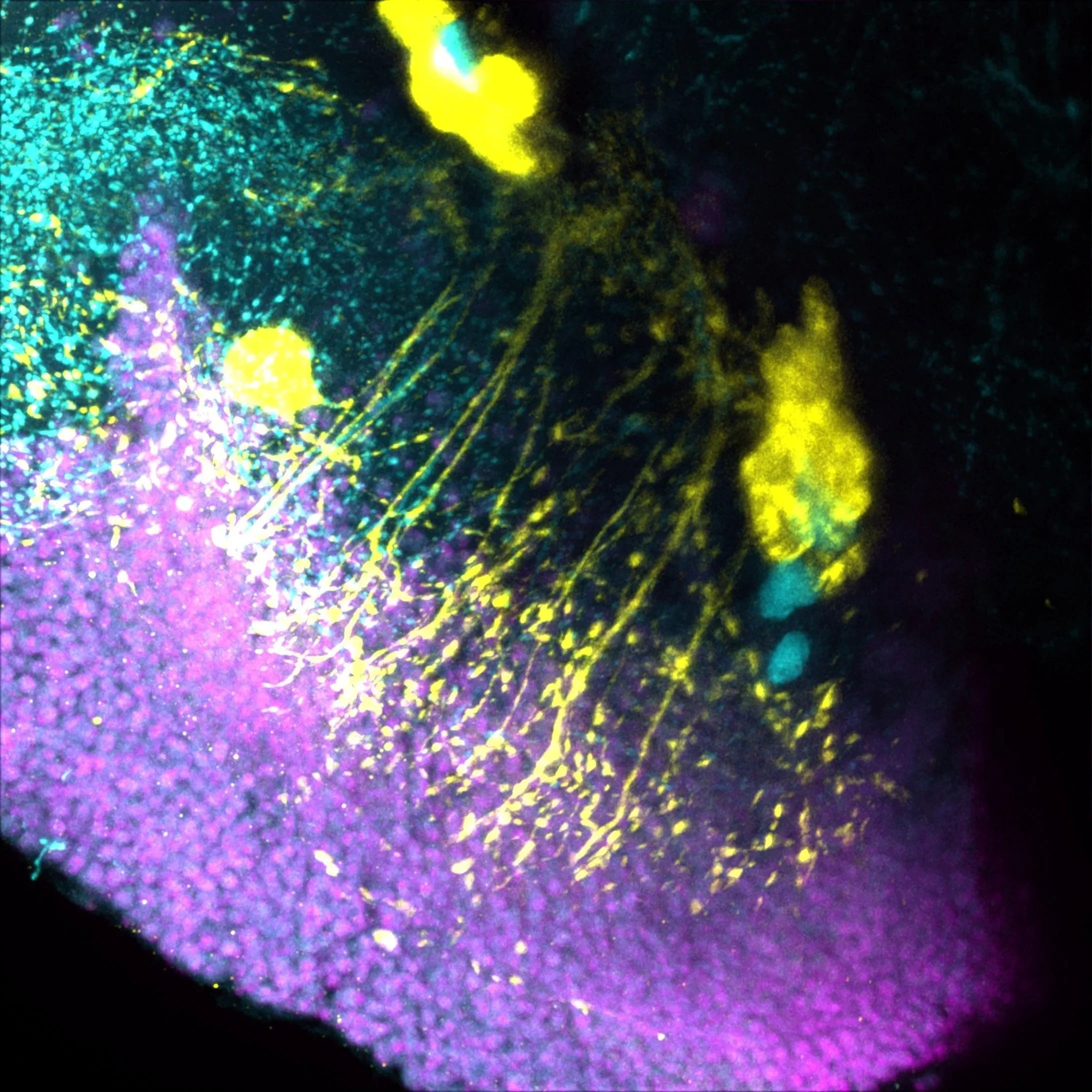
Understanding the neural mechanisms of mating in malaria mosquitoes
Each year, malaria transmitted by mosquitoes causes around 600,000 deaths. Despite its global health priority, the neuroscience of mosquito mating behaviour is not well understood. The malaria mosquitoes mating behaviour is sexually dimorphic, occurring at dusk in male-dominated swarms, where males locate females acoustically.
The role of audition in mating is behaviourally and sexually dimorphic. At dusk, male mosquitoes retune their ears to amplify female sounds, increase their own flight tones to enhance audibility of the females’, and show phonotactic responses. In contrast, female mosquitoes do not morphologically alter their ears, flight tones, nor show phonotactic responses, and their ears contain half as many neurons as males.
Given the importance of the auditory pathways for mosquito reproduction, a deeper understanding of the underlying circuit could offer novel vector control strategies. Furthermore, this project will shed light on a fundamental neuroscience question: how auditory modulations influence behavioural outcomes.
In the lab, we are using single-nuclei RNA sequencing, spatial transcriptomics, genetic manipulation, and behavioural studies to uncover which neuronal populations are involved in auditory-based mating behaviour, where such populations are located, and how they orchestrate distinct behaviours.
This project is funded by the Wellcome Trust.
https://wellcome.org/research-funding/funding-portfolio/funded-grants/understanding-neural-mechanisms-mating-malaria
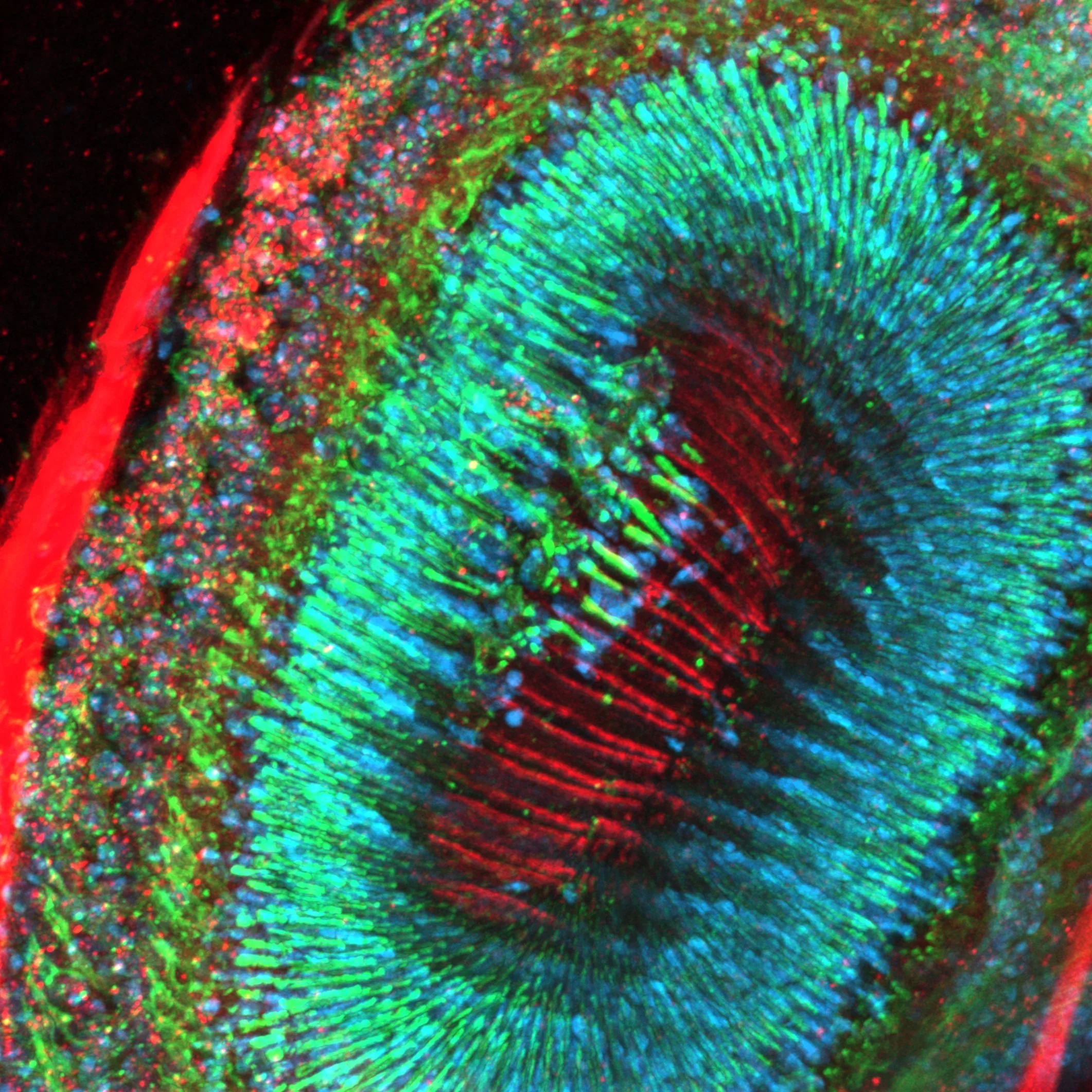
Cross section of the malaria-transmitting mosquito inner ear labelling GABAA receptor (red), neuronal tracks (green), and nuclei (blue). Credit A. Suppermpool
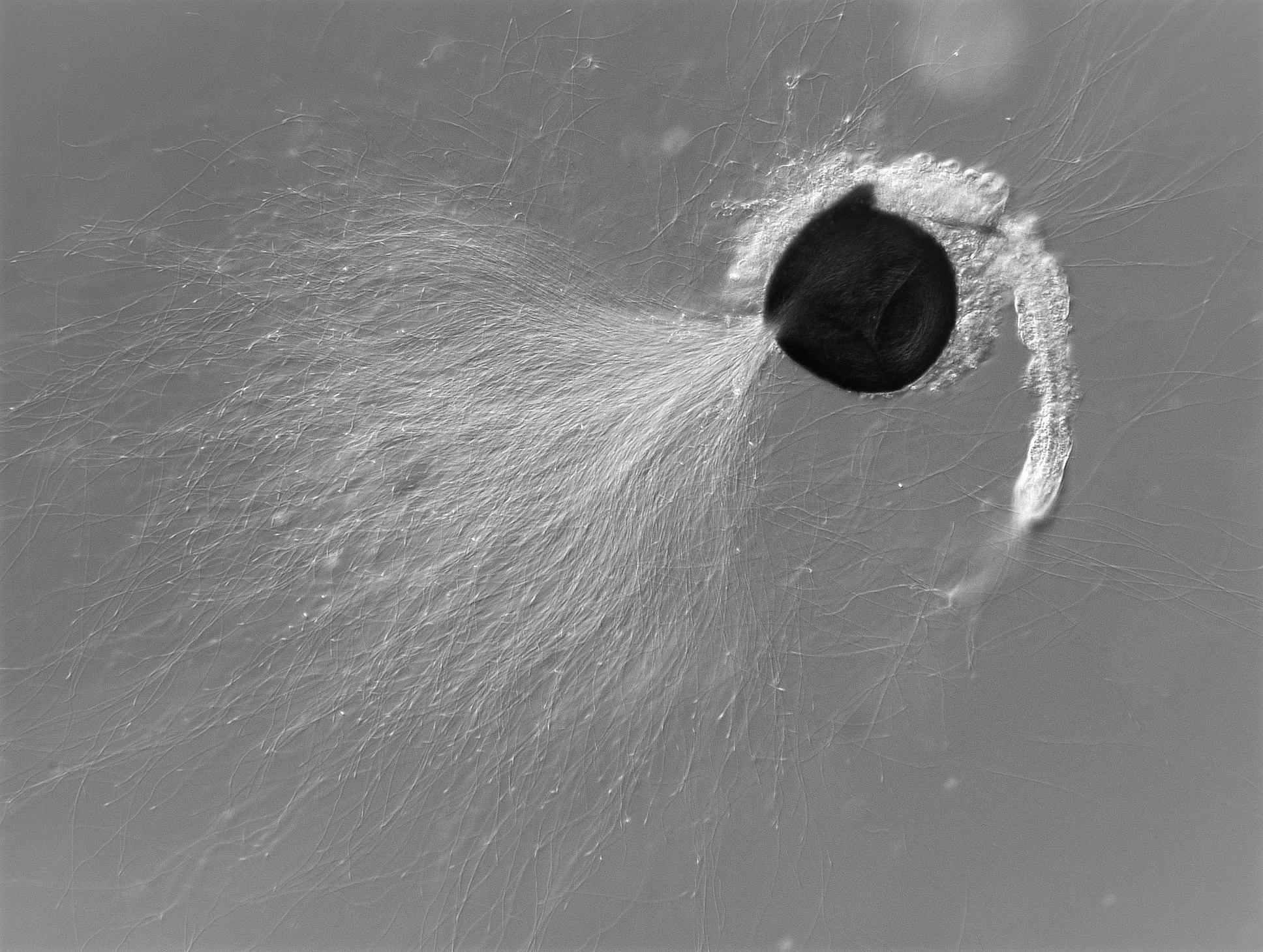
Bursting of the spermathecae releasing male mosquito sperms, seen under light microscope. Credit J. Bagi
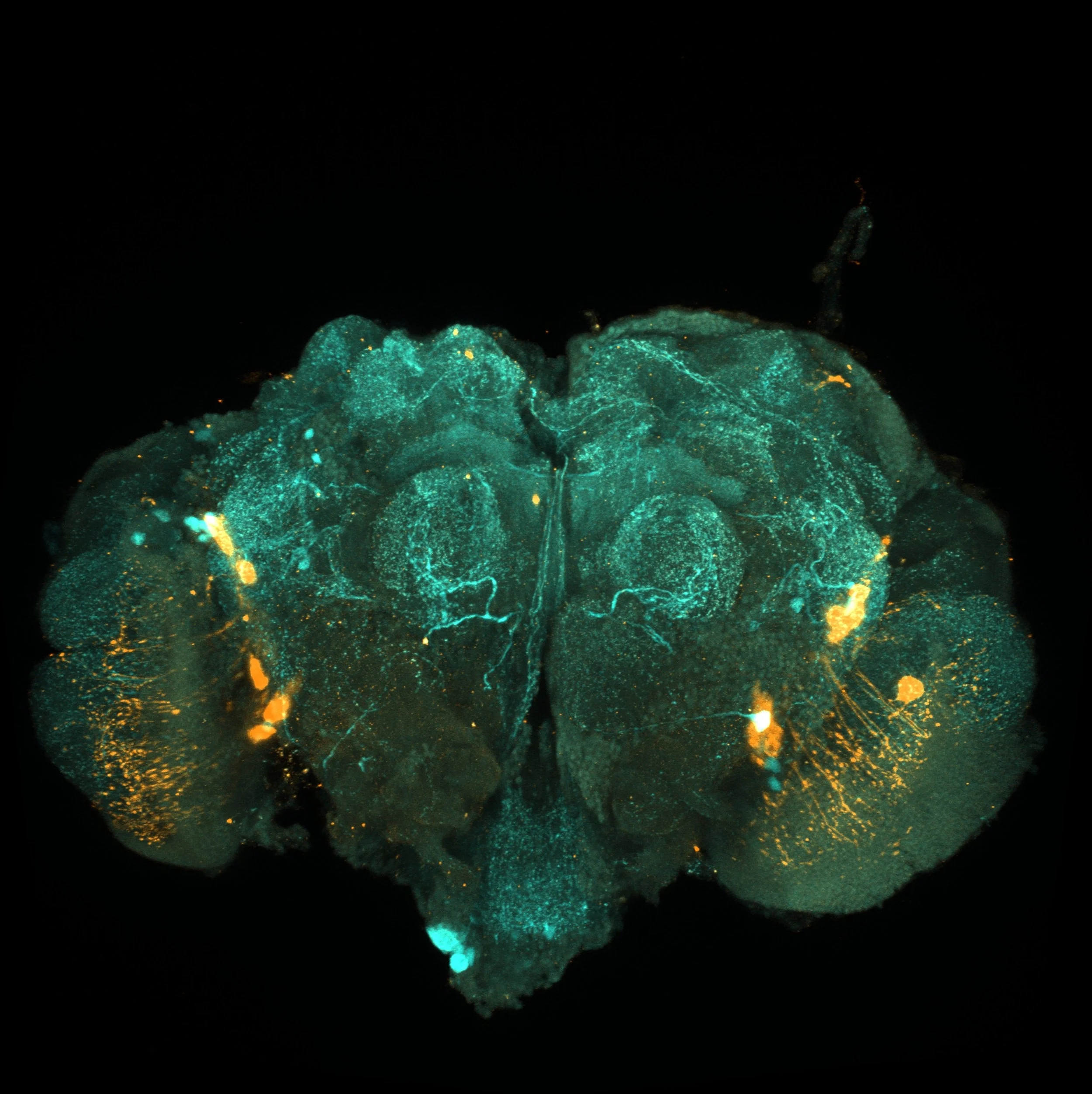
Male mosquito whole brain labelling serotonin (cyan) and PDF (orange) neurons. Credit A. Suppermpool